
What happened
USCIS has lifted an adjudication freeze specifically for foreign physicians holding J-1 waivers. This directive, effective immediately, aims to expedite the processing of green card applications (I-485, I-140) for medical professionals. The move is a direct response to critical healthcare shortages, a long-standing issue the U.S. has struggled to address. The goal is clear: get more doctors into service faster, particularly in underserved areas.
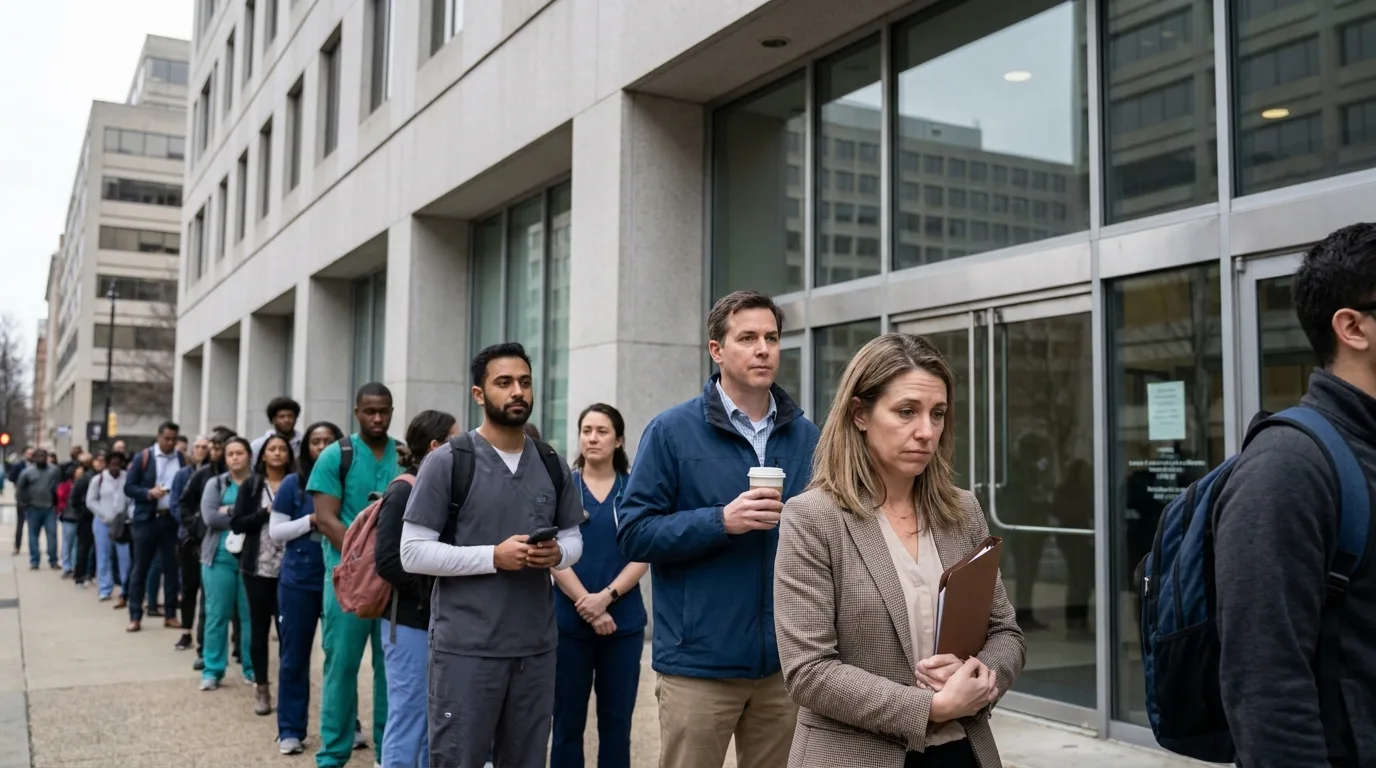
Simultaneously, however, a less publicized but far more impactful policy is tightening the screws on other immigration pathways. USCIS has implemented enhanced fingerprint-based background checks for nearly all other applicants. This isn't a minor tweak; it represents a significant increase in the scrutiny applied to biometrics. While the intention is to bolster national security, the practical outcome is a dramatic slowdown across the board. The Clark Hill report highlights that these enhanced checks are contributing to substantial delays, potentially extending processing times well into 2026.
The tension is stark: a targeted exemption for a high-priority sector versus a sweeping increase in vetting for everyone else. This policy dichotomy signals a strategic, yet potentially disruptive, shift in U.S. immigration priorities. It’s a classic trade-off: perceived security gains at the cost of processing efficiency for the vast majority of applicants.
The data behind it
The United States, with a Net Life Value (NLV) of 62/100, offers a compelling economic proposition for many, especially those earning a high income. However, the current delays, particularly for employment authorization documents (EADs) and travel permits, directly impact an expat's ability to work and move freely. For someone earning $75,000 annually, the U.S. imposes a tax of 22.5%, leaving a net of ~$58,000/year. This is competitive, but extended waits undermine the immediate value of that income.
Consider alternatives. For digital nomads or cross-border professionals, prolonged U.S. processing times make countries with more efficient or attractive immigration pathways significantly more appealing. Take Portugal, for example, boasting an NLV of 74/100. With a cost of living at 75% of the U.S. and a purchasing power parity (PPP) of 1.3× US, it offers a higher quality of life and a net income of ~$43,000 after a 42.5% tax on $75,000. While the tax rate is higher, the efficiency of entry and lower cost of living often balance the scales.
Or look at Spain, with an NLV of 76/100 and a PPP of 1.4× US. Its cost of living is 81% of the U.S., and while it taxes $75,000 at 32.3% (net ~$51,000), the overall value proposition is strong. Even countries like Thailand (NLV 78/100, PPP 4.2× US) and India (NLV 71/100, PPP 4.5× US) present starkly different economic realities. For those facing multi-year delays in the U.S., the economic pull of these countries becomes undeniable, especially if their income source is location-independent. The United Arab Emirates, with its 0% income tax and 2.1× US purchasing power, already attracts those prioritizing financial optimization; these delays will only strengthen its appeal.
What it means for you
If you're a foreign physician, congratulations: your path to permanent residency in the U.S. just got a little clearer. The USCIS decision means your I-485 and I-140 applications should move forward without the previous freeze. This is a targeted win designed to address a critical domestic need.
For everyone else—expats, digital nomads, and cross-border professionals on other immigration pathways—expect significant delays. This includes those awaiting EADs, travel documents, and other immigration benefits. Your applications will be caught in the broader backlog created by enhanced fingerprint checks. This isn't a temporary blip; it's a systemic slowdown. You need to factor this into your financial and relocation planning. Do not rely on previous processing timelines.
This will accelerate the US → Portugal, Spain, and UAE pipelines. Professionals with portable skills and income will increasingly evaluate the opportunity cost of waiting out U.S. immigration backlogs versus establishing residency elsewhere. The financial benefits of faster processing, lower cost of living, and sometimes even better purchasing power in countries like Portugal (NLV 74/100) or Spain (NLV 76/100) will become more attractive. If your U.S. immigration status is pending, explore your Plan B options now.
Bottom line
USCIS is playing triage, prioritizing doctors while making everyone else wait. For most applicants, extended U.S. immigration delays are the new normal, making alternative global destinations more appealing than ever.