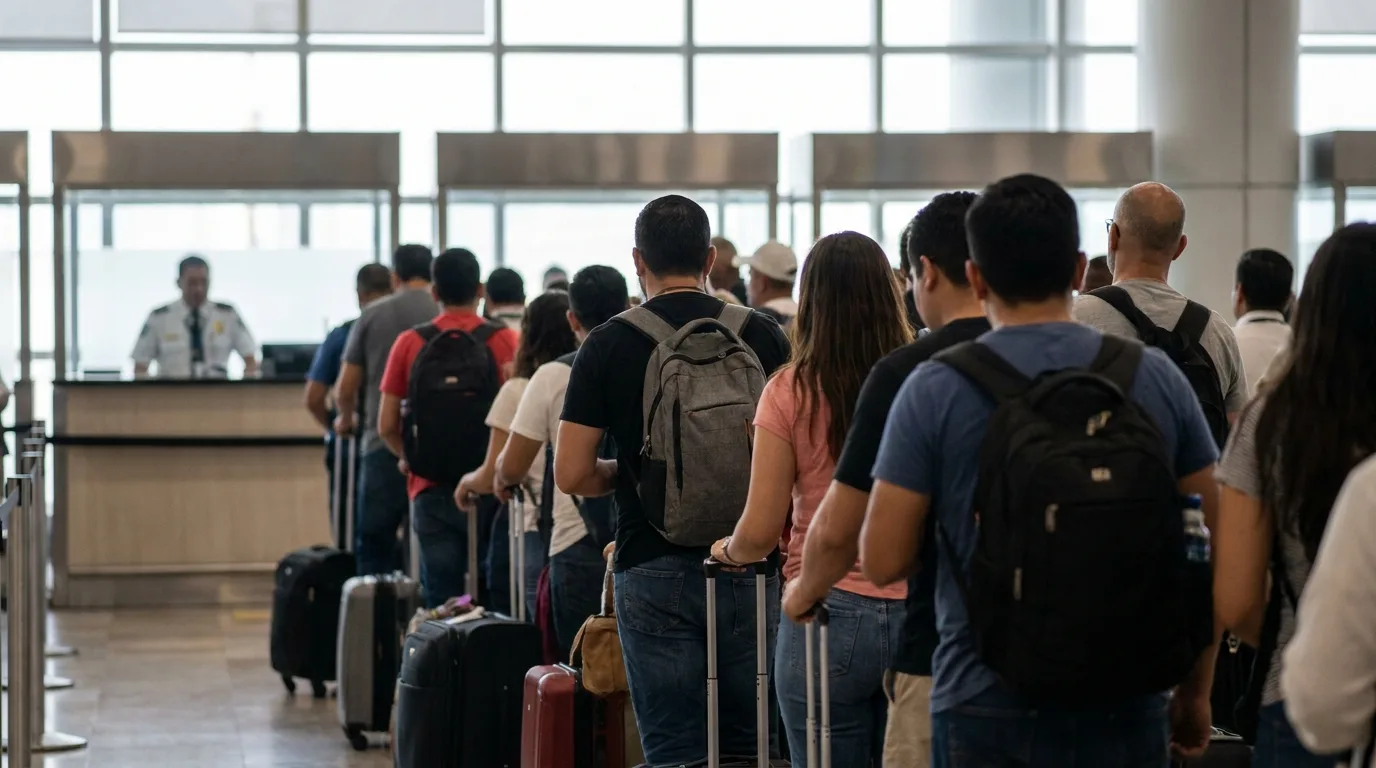

What happened Mexico's immigration authorities are subtly, but definitively, closing the door on the long-standing practice of the 'visa run.' For years, digital nomads and long-term visitors could simply exit Mexico, cross a land border into Guatemala or Belize, and re-enter, effectively resetting their 180-day tourist visa. This informal arrangement allowed many to reside in Mexico indefinitely without obtaining formal residency.
Recent reports from Global Hub of Travel Knowledge indicate a significant increase in scrutiny at border crossings. Immigration officials are now questioning the intent of frequent border-crossers, often denying re-entry or significantly shortening the allowed stay. The unstated policy shift aims to funnel long-term foreign residents towards formal temporary or permanent residency, which requires demonstrating financial solvency and often entails tax obligations.
The stated motivation from Mexican authorities is to better manage immigration flows and ensure foreign residents contribute formally to the economy. This move is less about stopping tourism and more about distinguishing between genuine tourists and de facto residents avoiding formal processes. It's a calculated tightening that aligns with a broader global trend.
The data behind it Mexico has long been a magnet for expats and digital nomads, largely due to its cost of living, which is 56% of the US average. This affordability, coupled with a 1.9× US purchasing power, has made it an attractive base for those earning in higher-value currencies. Compare this to the United States, where costs are 100% of the US average with a 1.0× US purchasing power, or even European options like Spain (81% of US cost, 1.4× US purchasing power) and Portugal (75% of US cost, 1.3× US purchasing power).
The appeal of Mexico has been amplified by the ease of maintaining tourist status. An expat earning $75,000 annually in Mexico currently faces a 28.0% tax rate, resulting in a net income of approximately $54,000 per year. While this is a significant tax burden, it's often offset by the lower cost of living and higher purchasing power. However, formal residency brings with it a more robust tax framework, including potential capital gains and worldwide income considerations, depending on tax treaty specifics and individual circumstances. This is a stark contrast to places like the UAE, which boasts a 0.0% tax rate on the same income, yielding a full $75,000 net and a 2.1× US purchasing power.
This policy shift also reflects a global pivot. Countries are increasingly seeking higher-value immigrants and formalizing revenue streams from their long-term foreign populations. The US, for example, is raising visa fees and tightening policies. Europe has seen similar movements, with many nations introducing digital nomad visas that, while offering a path to legal residency, also come with clear tax obligations. Mexico is simply joining the ranks of nations seeking to monetize the digital nomad phenomenon beyond initial tourist spending.
What it means for you If you've been relying on the 'visa run' strategy, consider it obsolete. The era of indefinite tourist status in Mexico is drawing to a close. Your options are now clearer: either commit to formal residency or adjust to shorter stays. Attempting to circumvent the new scrutiny will likely result in denied re-entry, significant travel disruptions, and potential blacklisting.
For those considering a long-term stay, formal residency is the path forward. This means preparing documentation for temporary or permanent residency visas, demonstrating sufficient financial means, and understanding your tax obligations. While it adds a layer of bureaucracy, it provides stability and legal standing. This push towards formalization might make Mexico less attractive for those seeking to minimize tax exposure, potentially accelerating a shift towards countries like Thailand, which offers 4.2× US purchasing power and a 19.4% tax rate for an expat on $75,000, or India, with 4.5× US purchasing power.
Expect increased enforcement and a clear expectation from Mexican authorities that long-term foreign residents integrate formally. This means budgeting for visa application fees, potential legal assistance, and, critically, understanding the full scope of your tax liabilities as a resident. It's a move from informal flexibility to formal compliance.