
What happened Germany officially launched its 'Opportunity Card' (Chancenkarte) visa program, effective June 1, 2024. This new points-based system aims to attract non-EU skilled workers, addressing critical labor shortages. Applicants earn points for qualifications, German language skills, professional experience, age, and ties to Germany. The visa initially grants a one-year stay for job seeking, with the possibility of extension once a job is secured. A key requirement is proof of sufficient funds to cover living expenses, currently set at €1,120 per month (approximately $1,215 USD) for the duration of the initial year, totaling over $14,500. This ensures applicants can sustain themselves while searching for employment.
The motivation behind the 'Opportunity Card' is clear: Germany needs talent. With an aging population and robust industries, the country faces a substantial deficit of skilled professionals across various sectors. The German government expects the visa to make the country a more attractive destination, allowing individuals to enter without a pre-secured job offer, a significant departure from previous, more restrictive immigration policies.
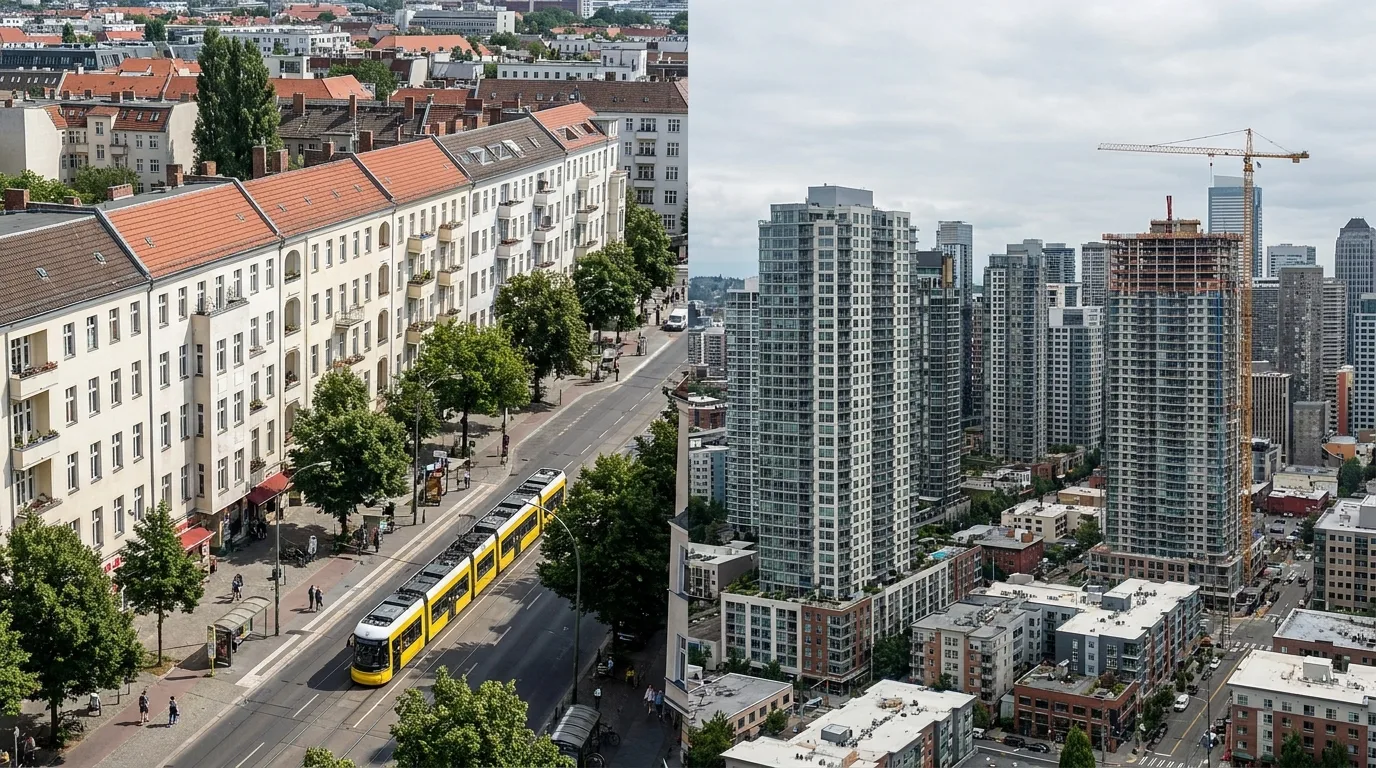
The data behind it Germany's cost of living, at 93% of the US average, is not cheap, particularly in major economic hubs like Munich, Frankfurt, or Berlin. While the national average PPP (Purchasing Power Parity) is 1.0× US purchasing power, this figure masks significant regional disparities. For an expat moving without an immediate high-paying job, the mandatory €1,120 per month proof of funds will quickly diminish, especially when faced with urban rent and daily expenses.
Consider the net income implications. On a gross income of $75,000, an expat in Germany could see their net income reduced to approximately $45,000 annually, due to a substantial 39.4% tax rate. This is significantly higher than the US (22.5% on $75K, net ~$58K/yr) or the UK (24.1% on $75K, net ~$57K/yr). The combination of high taxes and urban living costs means the actual purchasing power for many could feel closer to 0.8× US in expensive cities, despite the national average.
Comparatively, countries like Portugal or Spain offer much higher purchasing power for expats. Portugal has a cost of living at 75% of the US and a PPP of 1.3× US purchasing power, while Spain, at 81% of US cost, boasts 1.4× US purchasing power. Even with higher tax rates in some cases, the lower cost of living can dramatically stretch an expat's budget, offering more financial runway during job searches or for a better quality of life. This financial reality will steer many 'Opportunity Card' holders away from the traditional, high-cost German centers.
What it means for you If you're a skilled professional considering Germany, the 'Opportunity Card' lowers the initial barrier to entry. You no longer need a job offer in hand. This is a clear benefit for those with in-demand skills and an appetite for adventure. However, the financial realities demand a strategic approach. Targeting cities like Munich or Berlin without a substantial financial buffer and a high-paying job offer is a risky gamble. The required proof of funds will barely cover basic rent in these areas, let alone other living expenses.
The real 'opportunity' for many will be found in Germany's secondary cities and towns. Locations outside the major metropolitan areas offer significantly lower rents and a generally lower cost of living, allowing your net income to stretch further. This decentralized approach could inadvertently foster new hubs of innovation and expat communities in places like Leipzig, Dresden, or even smaller university towns. These regions often have strong local economies and a demand for skilled workers, but at a fraction of the cost of the traditional powerhouses.
For digital nomads or those with remote work potential, this strategy is even more compelling. You gain the benefits of German residency, healthcare, and infrastructure, while retaining a higher effective purchasing power by choosing a lower-cost base. This could be the mechanism that finally pushes diverse talent beyond Germany's established economic centers, creating new dynamics for local economies.