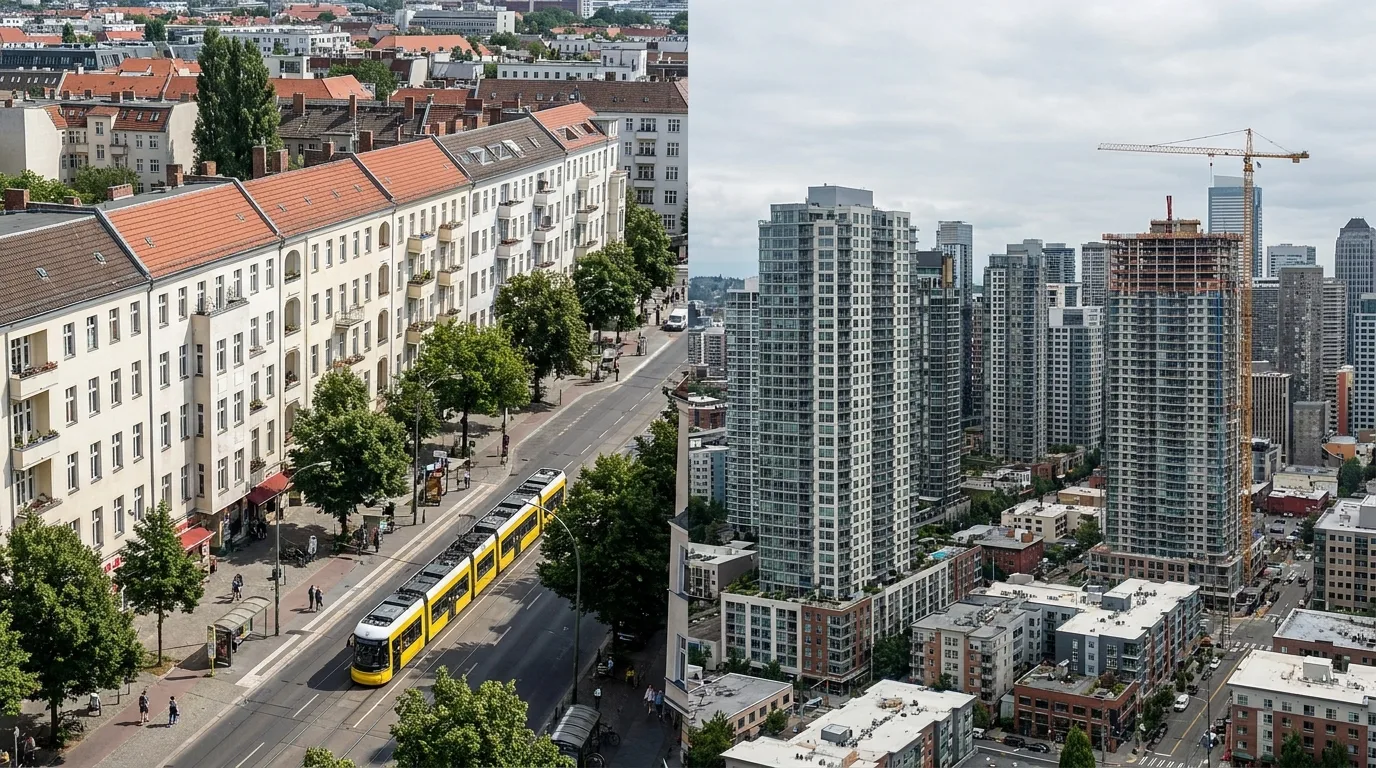

What happened Germany’s cabinet has taken a decisive step to curb surging housing costs, proposing a new law to cap index-linked rent increases. The draft legislation, currently under deliberation, aims to protect tenants from the full brunt of inflation. Specifically, the proposed measure dictates that half of any rent increase exceeding 3% annually will be disregarded. This means if inflation pushes the index-linked increase to, say, 5%, only 3% plus half of the remaining 2% (i.e., 1%) would be permissible, capping the effective increase at 4%. This is a direct intervention, not merely a call for market self-correction.
This move comes as Germany, like many developed economies, grapples with high inflation impacting everyday costs. The German government's stated motivation is clear: to provide immediate relief and stability for tenants facing escalating housing expenses. It's a proactive measure designed to soften the financial blow, particularly in a market where housing supply has struggled to keep pace with demand, driving up prices.
The proposal also extends the duration of the 'rent brake' – a separate measure limiting rent increases upon re-letting – for another three years, until 2029. This dual approach signals a sustained commitment to tenant protection, aiming to cool both new rental prices and existing contract adjustments.
The data behind it Germany's preemptive action on rent control offers a fascinating contrast to the US approach. In the US, shelter costs continue to fuel inflation, outpacing falling asking rents. The Consumer Price Index (CPI) for shelter often lags real-time market shifts, meaning tenants in the US feel the sting of rising costs long before official inflation metrics reflect a slowdown. While the US relies on monetary policy and hope for market self-correction, Germany is legislating direct protection.
For a professional earning $75,000, Germany's cost of living is approximately 93% of the US, with a net income around ~$45,000 after a 39.4% tax rate. While this tax rate is significantly higher than the US's 22.5% on the same income, the government's willingness to intervene directly in cost-of-living issues like rent can offer a different kind of financial stability. Compare this to the US, where a similar income yields ~$58,000 net, but the cost of housing remains a significant variable and often an increasing burden.
The NLV score for Germany stands at 63/100, reflecting a balance of earning potential (EP 63) and quality of life (QoL 64). Spain, for instance, offers a higher NLV of 76/100, with a cost of 81% of the US and a net income of ~$51,000 from a 32.3% tax rate, providing 1.4× US purchasing power. Portugal, with a 74/100 NLV, has an even lower cost of 75% of the US and 1.3× US purchasing power, despite a 42.5% tax rate yielding ~$43,000 net. These European peers, while offering different tax and cost structures, are not currently instituting such direct rent caps, making Germany's move particularly noteworthy for its immediate impact on tenant finances.
What it means for you If you are an expat, digital nomad, or cross-border professional considering Germany, this proposed legislation significantly de-risks your housing budget. The fear of unpredictable, inflation-driven rent hikes is mitigated. This could make Germany a more attractive option for those prioritizing financial stability in their relocation decisions, especially when compared to countries with less interventionist housing policies. For current tenants in Germany, this means immediate relief and more predictable housing costs moving forward.
Landlords, naturally, will face tighter profit margins on index-linked contracts. This could influence investment decisions in the long run, potentially impacting new housing supply. However, the immediate benefit for tenants is undeniable. For professionals seeking to maximize their net life value, this policy change in Germany tips the scales towards greater cost predictability, even with a higher initial tax burden. It’s a tangible benefit in a world where housing costs are a primary financial concern.
This also highlights a broader philosophical divergence. Countries like the US largely trust market forces, even when those forces lead to significant cost-of-living challenges. Germany, on the other hand, is demonstrating a clear preference for direct governmental intervention to protect its citizens and residents from economic volatility. This could accelerate the US → Germany pipeline for some, particularly those burned by escalating US shelter costs.