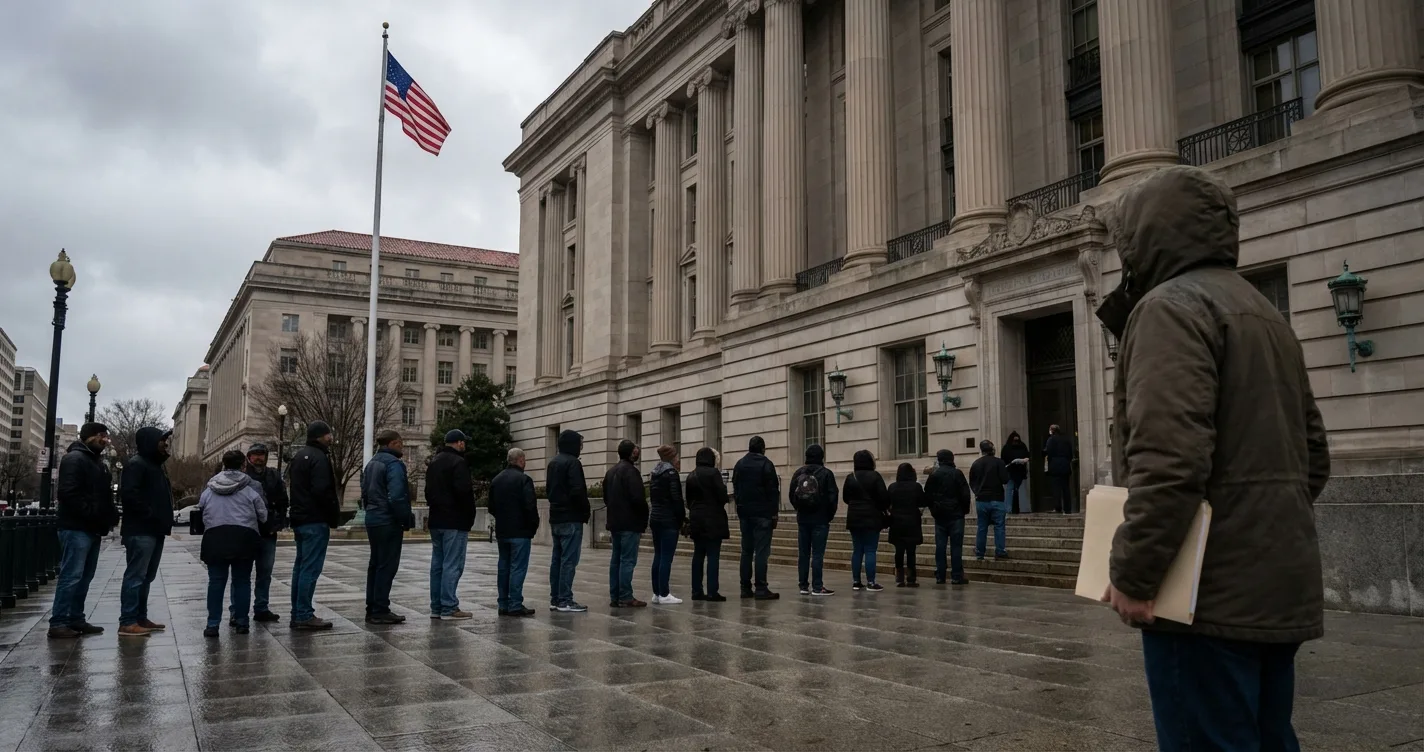

What happened
US Citizenship and Immigration Services (USCIS) announced a significant policy shift: it will now grant Adjustment of Status (AOS) only in "extraordinary circumstances." This means the vast majority of individuals seeking lawful permanent resident status (a Green Card) will no longer be able to complete their application from within the United States. Instead, they must undergo consular processing abroad, necessitating a departure from the U.S. and an interview at a U.S. embassy or consulate in their home country or country of last residence. USCIS frames this change as a return to the “original intent” of immigration law, prioritizing consular processing over domestic adjustments.
The policy, effective immediately, effectively closes a crucial pathway for many immigrants already living and working in the U.S. Legally, they entered the country, often on temporary visas, and have been waiting for their opportunity to adjust status. Now, they face an unexpected and costly mandate to leave, apply from overseas, and then re-enter the U.S. This isn't a mere procedural tweak; it's a fundamental alteration to the immigration journey for potentially hundreds of thousands of individuals and families.
The data behind it
This policy change introduces a substantial financial burden, acting as an implicit "relocation tax" on those seeking permanent residency. Consider the cost of international travel: flights, accommodation, and lost income during the mandatory absence from the U.S. For a family of four, a round trip from the U.S. to, say, India, could easily run into five figures. While a professional in the U.S. earning $75,000 might net around $58,000/year after a 22.5% tax, the purchasing power of that money varies wildly abroad.
An expat in Thailand, for instance, enjoys 4.2× US purchasing power. In Mexico, it's 1.9×, and in Portugal, 1.3×. This stark difference means that while a mandatory trip abroad might be less financially punishing for someone with significant savings, it becomes an insurmountable hurdle for many. The policy will disproportionately impact individuals from countries where the cost of living and, by extension, the cost of an extended stay for processing is higher relative to their potential U.S. earnings or savings.
Furthermore, the policy creates extended periods of family separation. Many applicants have established lives, jobs, and children enrolled in U.S. schools. Forcing them to leave not only incurs direct travel costs but also indirect costs like childcare, potential job loss, and disruption to education. This isn't just about money; it's about the social and emotional fabric of integrated families, now compelled to unravel for bureaucratic reasons.
What it means for you
For current green card applicants, this means immediate re-evaluation of your strategy. If you were planning an Adjustment of Status, assume you will now need to prepare for consular processing abroad. This includes budgeting for international travel, potential visa costs for the country of your consular interview (if not your home country), and factoring in an indeterminate period of absence from the U.S. — and potentially your job.
This move will likely accelerate the outbound migration of certain professionals and families. For those disillusioned by the increasing complexity and cost of U.S. immigration pathways, countries offering more straightforward residency options become significantly more attractive. We've already seen a steady 'US → Portugal' pipeline, where a Net Life Value (NLV) of 74/100 and 1.3× US purchasing power offers a compelling alternative to the U.S.'s NLV of 62/100. Similarly, Spain (NLV 76/100, 1.4× US PPP) and Thailand (NLV 78/100, 4.2× US PPP) gain appeal. This policy essentially pushes the already high cost of living in the U.S. even higher for immigrants, making financially accessible alternatives look even better.
Expect delays. Consular processing can be lengthy, and an influx of new cases will undoubtedly strain U.S. embassies and consulates worldwide. This policy isn't just a hurdle; it's a significant roadblock that could extend the green card journey by months, if not years, for many applicants. The extraordinary circumstances clause offers little solace; it's designed to be narrow and difficult to meet, not a general safety net.
Bottom line
USCIS's new policy is a stealth relocation tax on immigrant families, forcing costly international travel and extended separation under the guise of 'original intent.' It will undoubtedly drive some talented individuals and families to seek greener pastures in countries offering more predictable and less punitive residency pathways. The U.S. is making itself a harder place to call home.