
What happened
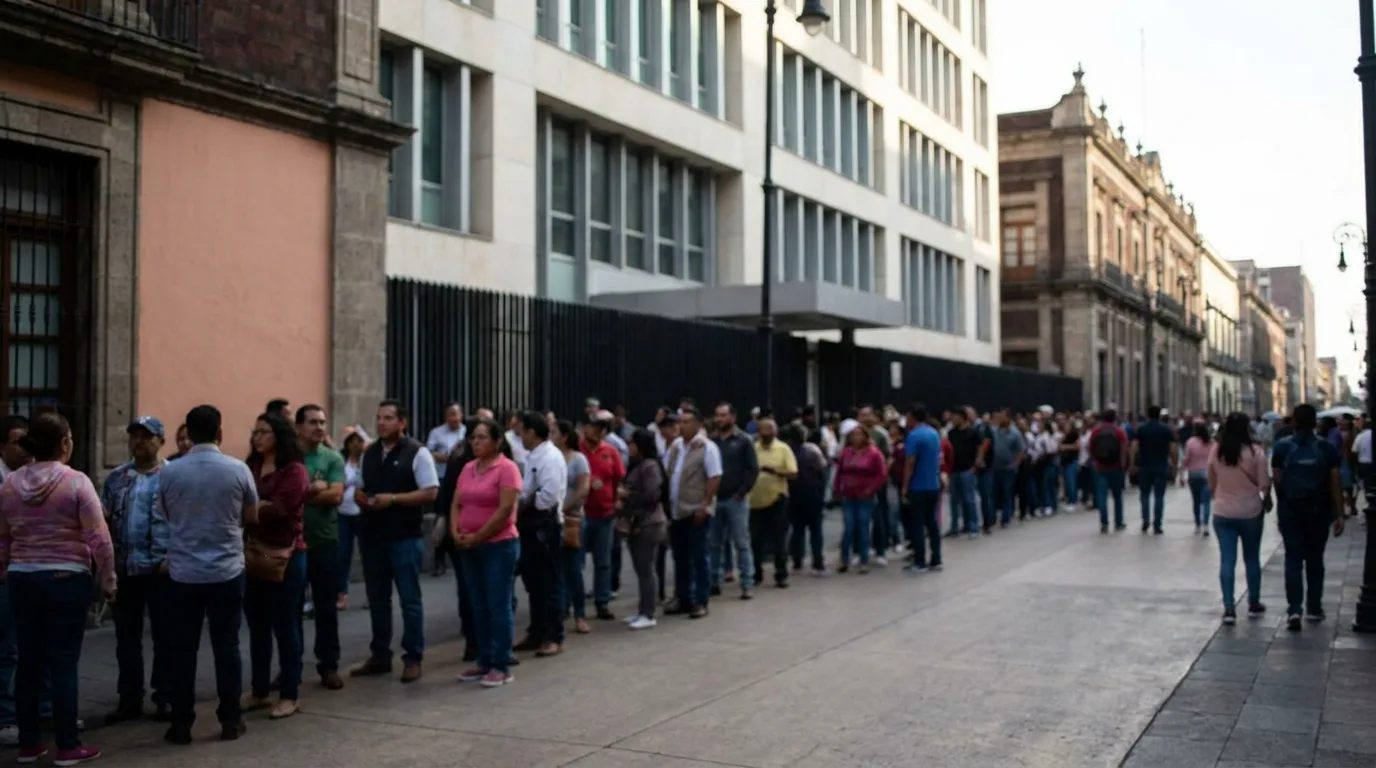
The U.S. State Department recently launched a pilot program for expedited non-immigrant visa appointments, charging a $750 fee. This new service, initially available in Mission Mexico, allows applicants to secure urgent appointments for a range of non-immigrant visas, including B1/B2 (business/tourism), F/M (student), J (exchange visitor), and H/L/O/P/Q/R (various work and petition-based visas). The stated motivation is to assist travelers with legitimate urgent needs, such as unforeseen business travel or critical family matters, by providing faster access to interviews.
This $750 charge is in addition to the standard Machine Readable Visa (MRV) application fee, which itself saw an increase in June 2023. For context, the MRV fee for most non-petition-based visas jumped from $160 to $185, while certain petition-based visas rose from $190 to $205. The expedited program, therefore, represents a significant premium for speed, effectively creating a two-tiered system for visa processing.
While the State Department frames this as a tool for urgent travel, the practical outcome is clear: access to timely visa services now comes with a substantially higher price tag. This move reflects a broader trend of monetizing efficiency and access within government services, particularly in areas critical to global mobility.
The data behind it
The introduction of a $750 expedited visa fee comes at a time when the cost of living in the United States is already a significant concern. Families have seen hundreds of dollars added to their monthly expenses for housing and transportation over the past year. This new visa fee acts as another layer of cost, especially for those who need to travel to the US for work or business.
Consider the financial implications for professionals deciding where to base themselves. While the U.S. offers a net income of approximately ~$58K/yr on a $75K salary, with a 22.5% tax rate, its purchasing power (PPP) is 1.0× US. Compare this to countries like Mexico, where the expedited program is currently offered, with a cost of 56% of the US and a PPP of 1.9× US. A $750 fee for a visa, while a one-time cost, is a larger proportional expense for individuals from economies with higher purchasing power multiples relative to the US.
For an expat or digital nomad, these escalating costs in the US weigh heavily against the benefits. Countries like Portugal (cost 75% of US, PPP 1.3× US) or Thailand (cost 54% of US, PPP 4.2× US) offer significantly more purchasing power. Even in Europe, Spain (cost 81% of US, PPP 1.4× US) presents a more financially viable option for many. The new visa fee, therefore, is not just an administrative charge; it's another data point in a growing ledger that makes the U.S. a less attractive destination for some mobile professionals.
What it means for you
For expats, digital nomads, and cross-border professionals, this new $750 fee is a de facto "fast-pass tax" on mobility. If your work or personal circumstances require frequent or urgent travel to the US, budget this additional cost into your financial planning. This is particularly relevant for those operating on tighter margins or those whose employers do not cover visa fees.
This policy will likely accelerate the trend of professionals considering alternatives to the US for their primary base of operations. When evaluating Net Life Value (NLV), factors like visa costs, processing times, and overall cost of living are critical. Countries with high NLV scores and higher PPP multiples, such as the UAE (NLV 87/100, PPP 2.1× US) or South Korea (NLV 81/100, PPP 1.7× US), become even more compelling. The US, with its NLV of 62/100, is adding friction to its appeal.
If you find yourself needing an expedited appointment, understand that this is no longer a free benefit. It's a premium service, and you're paying for it. For those regularly traveling between the US and Mexico, specifically, this pilot program directly impacts your operational costs. Ensure your travel contingency plans account for this new expense.
Bottom line
The State Department's $750 expedited visa fee is not merely an administrative adjustment; it's a mobility tax. This move solidifies the trend of premium pricing for essential services, making the U.S. an even more expensive proposition for global professionals and prompting a reevaluation of where true value lies for their cross-border lives. Pay to play, or find a new playground.