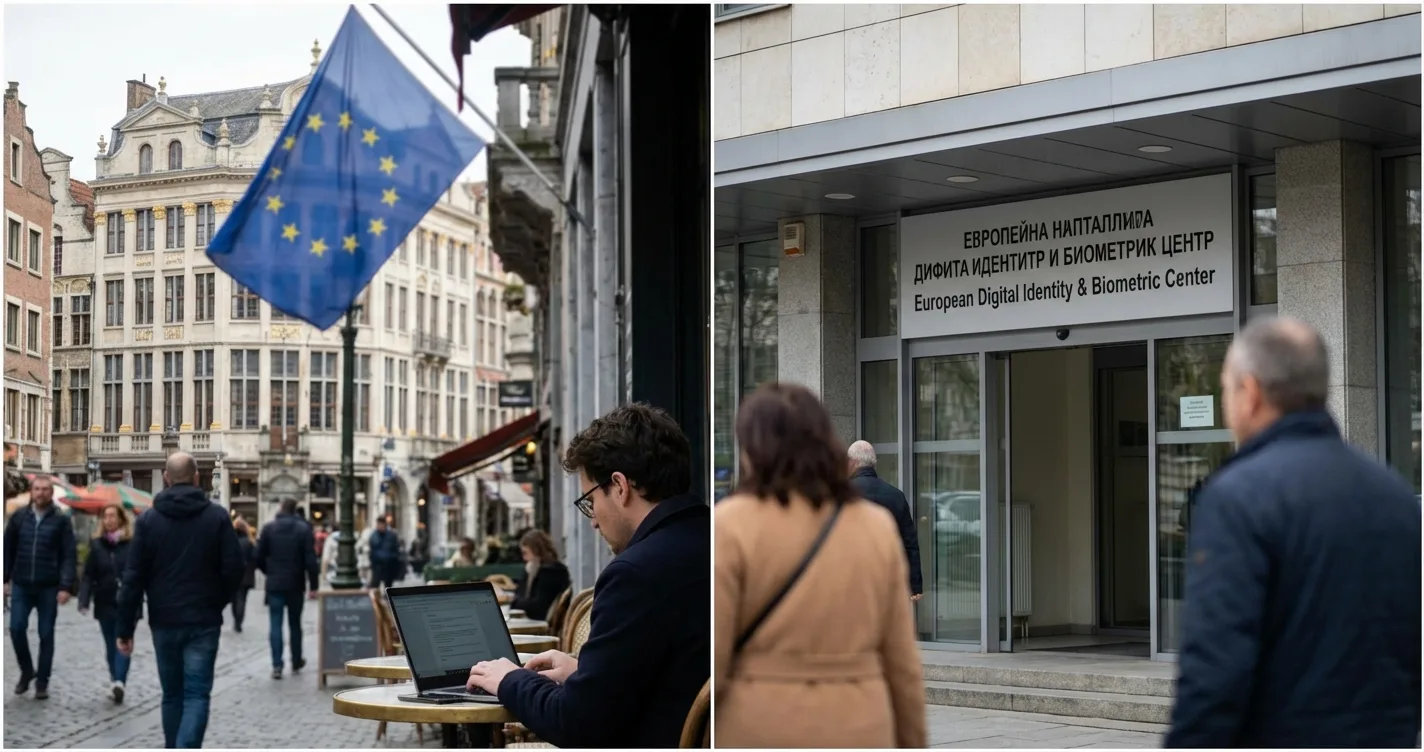

What happened As of today, the European Union's Entry/Exit System (EES) is fully operational across 25 Schengen Area countries. This includes major expat destinations like France, Germany, Italy, Spain, and Portugal, alongside Belgium, Czech Republic, Denmark, Estonia, Greece, Netherlands, Norway, Poland, Sweden, and Switzerland. The EES fundamentally changes how non-EU citizens, including those from the US, UK, Canada, and Australia, enter and exit the Schengen zone for short stays. No longer a simple passport stamp, the system now mandates the collection of biometric data—specifically fingerprints and facial scans—upon first entry. This data will be stored for three years and linked to your travel history.
The stated motivation behind the EES is to enhance border security, identify overstayers, and automate border control. The system will precisely track entry and exit dates, making it impossible to circumvent the 90/180-day rule through ambiguous passport stamps. While touted as a security measure, the immediate, practical impact will be a significant slowdown at border crossings, particularly at airports and major land entry points.
The data behind it This isn't just about security; it's about control and capacity. For non-EU citizens, the EES means a more bureaucratic entry process into a region that attracts significant digital nomad and expat interest. Consider Portugal, a top destination for US citizens seeking an EU base, offering a 1.3× US purchasing power and a compelling NLV score of 74/100. Spain, another popular choice, provides 1.4× US purchasing power with an even higher NLV of 76/100. Many leverage the 90/180-day rule to spend extended periods in these attractive, lower-cost countries, perhaps even rotating between them and non-Schengen neighbors like Croatia or Albania.
However, the EES makes this border hop strategy more complex and risky. The system's precise tracking eliminates any ambiguity regarding overstays. For someone earning $75,000 annually, the tax differences are substantial. In Portugal, you might pay 42.5% tax, netting around $43,000/year. In Spain, it's 32.3%, netting $51,000/year. These figures, when combined with the enhanced purchasing power, remain attractive. The EES doesn't change the financial calculus, but it does add a layer of logistical friction, potentially pushing some to consider longer-term visas or alternative non-Schengen hubs.
The system's implementation will likely expose bottlenecks at historically busy entry points. Countries like France, with its 33.5% tax rate and 1.1× US purchasing power, or Germany, with a 39.4% tax rate and 1.0× US purchasing power, are massive transit hubs. The initial rollout will be messy, and the promised automation will take time to materialize, if it ever fully does. Think of it as a tax on your time, especially if your travel pattern is frequent, short stays.
What it means for you For the casual tourist, the EES means a slightly longer queue and a quick biometric scan. For the digital nomad or cross-border professional relying on the 90/180-day rule, this is a significant shift. Your days of playing fast and loose with Schengen dates are over. The system is designed to catch overstayers, and it will. This will accelerate the trend of non-EU citizens pursuing long-stay national visas for specific EU countries, like the increasingly popular D7 visa in Portugal or Spain's digital nomad visa. These visas, while more bureaucratic upfront, offer stability and circumvent the EES's short-stay limitations.
Expect substantial delays at airports, especially during peak travel seasons. The biometric enrollment process, even if designed to be quick, will add minutes per traveler. Multiply that by hundreds of thousands, and you have hours of additional wait time. This impacts travel plans, connections, and overall experience. My advice: arrive at EU airports much earlier than usual for the foreseeable future. Consider flying into smaller airports if possible, or bracing for the inevitable queues at major hubs like Paris CDG, Frankfurt, or Rome Fiumicino.
This also reinforces the attractiveness of non-Schengen options for short-term rotation. Countries like Thailand, offering a remarkable 4.2× US purchasing power and a generous visa policy for many, or Mexico with 1.9× US purchasing power, might see an uptick in interest from those looking to avoid the EU's new entry hurdles. The EU just made short-term, multi-country mobility within its borders significantly less convenient. Your itinerary planning just got more complex.